TEACHING philosophy
Design education should expand a person’s sense of possibility. I want students to develop the confidence to pursue ideas that matter to them and the judgment to consider what those ideas mean for others. The studio gives them space to work through uncertainty and discover capabilities they can carry into unfamiliar situations.
My teaching is grounded in educational psychology and research on motivation and creative self-efficacy. I pay particular attention to feedback: how it is experienced and what it enables a student to do next. Critique should make expectations clear while leaving consequential decisions with the learner. Care involves taking someone’s ideas seriously enough to challenge them, with the patience to support their development. A student’s ownership of the work must survive the feedback intended to improve it.
In transdisciplinary learning, students encounter perspectives that can change their understanding of the problem itself. I ask them to examine whose experience informs a proposal and where knowledge beyond their own field is needed. As AI expands the possibilities for making, these habits become essential. Students need opportunities to experiment with emerging tools and develop a considered position on how they use them. The ability to produce something carries a responsibility to understand its purpose and consequences.
I hold my own teaching open to the same questioning. Students bring experiences and ways of seeing that can expose the limits of an established approach. Their responses help me reconsider what I teach and how I teach it. Preparing people for a changing world requires educators who are willing to keep learning within it.
Watch my TED talk, “It’s Time We Let Our Students Teach Us.”
areas of teaching
Over thirty years, my teaching has developed across visual communication and the moving image, including photography, documentary and experimental filmmaking, animation, and motion design. These fields connect through an interest in how we make sense of experience through creative work. I help students find the relationship between what they want to say and the form that allows others to encounter it.
I teach from foundation design through advanced undergraduate studios and graduate research in transdisciplinary design. At each level, the questions become more demanding: What deserves our attention? What can a particular medium reveal? When does a design problem require knowledge beyond design? My studios bring research into conversation with making, encouraging students to develop their own position and test it through their work.
Professional practice is another sustained area of my teaching. For more than eleven years, I designed and taught a course supporting the transition from university into working life. This experience continues to inform how I connect creative education with questions of professional identity, collaboration, and responsibility.
My current interests extend to human–AI collaboration and the ways emerging technologies change creative practice. Alongside this, my faculty development work draws on research into motivation, feedback, and creative self-efficacy. Across these settings, I am interested in education that gives people the confidence and judgment to contribute to fields whose possibilities are still being defined, while remaining responsible for their individual contributions and learning how their decisions affect the production as a whole.
Student projects
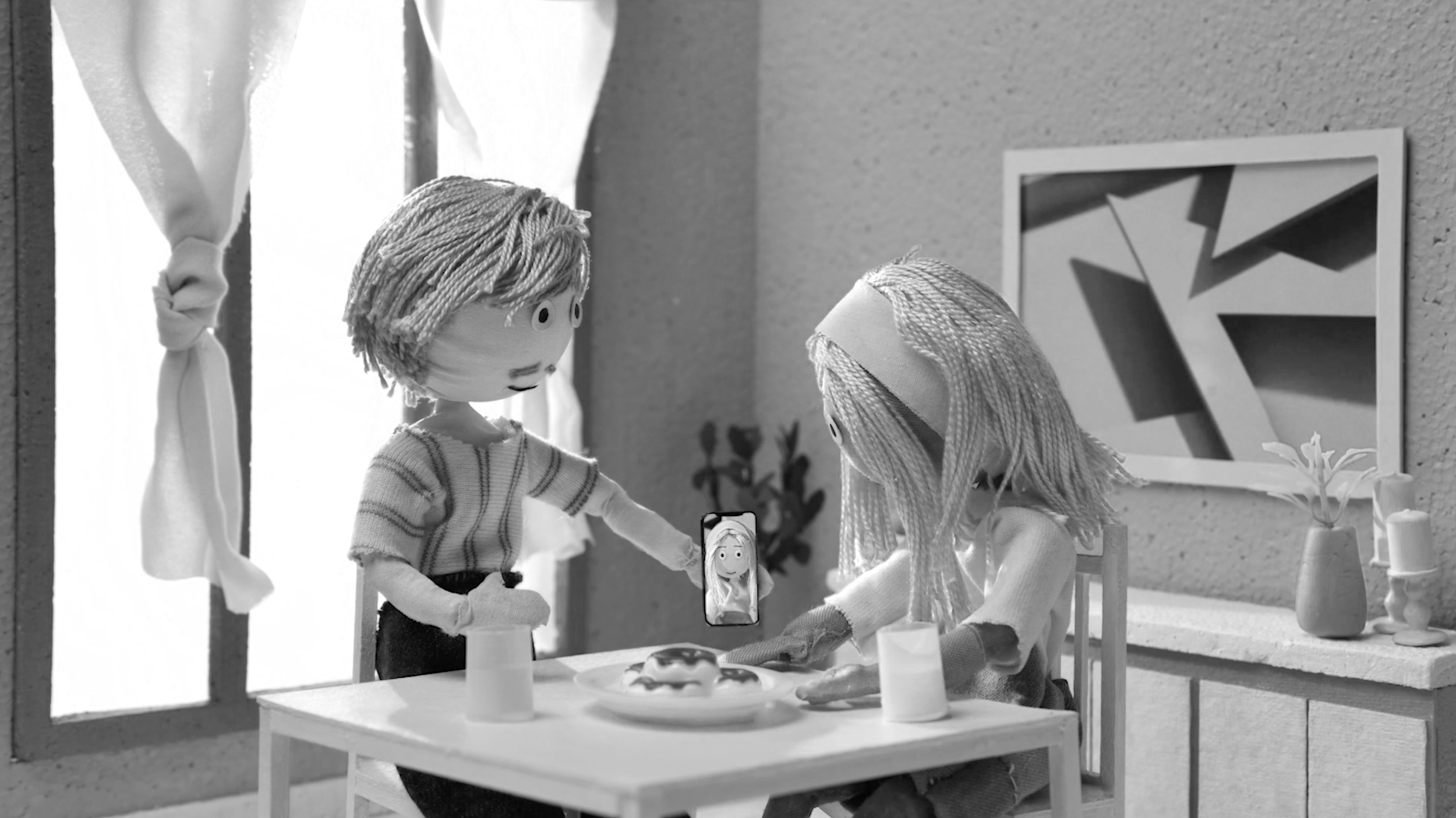
Below are compilations of student work produced in multiple courses within the Multimedia Design program in the categories of experimental film, narrative film and 2D animation. I was involved in the mentoring and supervision of all projects, from concept development, storyboarding, pre-production, production to post-production. Particular emphasis was placed on the artistic direction and exploration of the sound/image relationship.